Travel Surveys
Hampshire County Council carries out biennial travel surveys on behalf of the Whitehill and Bordon Regeneration Company. These travel surveys are required to meeting the planning requirements of the Prince Philip Park development travel plan and are fully funded.
The surveys ask the community of Whitehill and Bordon how they currently travel and what might encourage them to travel more sustainably or actively in the future. The responses and feedback, in collaboration with local partners, will help us to plan and provide activities and measure that benefit the Whitehill and Bordon community. So far we have completed surveys in 2020, 2022 and 2024.
We would like to thank everyone who took part in these surveys. Please see below for the reports.
Travel Survey 2024
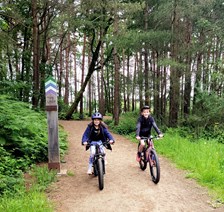 This survey was carried out in November and December 2024, and there were 326 responses.
We promoted the survey on our My Journey digital channels, ran a social media campaign and it was also promoted by Whitehill and Bordon's Living Streets Group.
Headline Findings
- Motor vehicle usage was high for all journey types, with the top three destinations being main food shops, top-up food shops, and socializing.
- 13% indicated that they lift-shared at least once per month, with 31% of respondents doing so to save money.
- Most vehicles were diesel/petrol (66%), with 9% using an electric car and 25% considering buying one in the future.
- Public and community transport usage could be increased with improvements to frequency, reliability, online booking options, and clearer information.
- There was high satisfaction with the Green Loop, with 76% aware of the new Lindford Link.
The survey report can be found at this link.
Travel Survey 2022
 This survey was carried out in October and November 2022.
There were 538 responses, including 427 users of train services and 227 users of public bus services, 126 users of community transport services, for example Taxishare, and 161 cyclists.
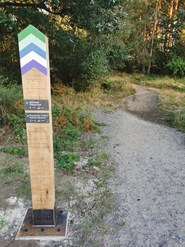
The 7k Green Loop was added to this years' survey. It is a new addition to the area, promoting health by enabling active travel such as walking and cycling, and it was important to find out what the residents thought about it, and if it was encouraging them to actively travel.
Headline Findings
- Motor vehicles were the most commonly used means of transport for all types of journeys, with fewer respondents travelling around Whitehill and Bordon by foot, bike, public transport and lift share in 2022 versus 2020
- About 6 in 10 respondents from ethnic minority backgrounds or with health or disability issues felt they had missed opportunities to go out due to a lack of suitable transport options
- Respondents were more likely in 2022 to feel that journeys would be more difficult if undertaken solely by public transport than they did in 202
- About half of respondents felt that accessing a train station was a barrier to increasing their use of train services, while service frequency was the main barrier to increasing use of bus services
- Respondents could be most effectively encouraged to walk more around Whitehill and Bordon by improving walking links within the area (such as with new bridges, paths and ramps), and addressing concerns about safety when using walking routes
- Feelings were split regarding satisfaction with cycling routes in the area. Connectivity was most often mentioned by those satisfied and safety concerns most often mentioned by those dissatisfied with these facilities
- Cost is the greatest barrier to electric car ownership, particularly amongst those with lower household incomes
- There is strong satisfaction with the Whitehill and Bordon Green Loop, with respondents frequently saying that they enjoyed using it
The survey can be found at this link.
Travel Survey 2020
 The survey was published online and ran from September to October 2020. There were 452 respondents. It was identified that some residents would not be able to access an online survey and a paper version was therefore designed and distributed. A further 45 responses were received from this exercise.
Two focus groups were also run in November to further investigate some of the findings from the survey and provide richer data. A total of 12 people attended the focus groups to share their thoughts, with a good mixture of ages and length of residency in the area. The report summarises the findings from these 497 questionnaires and two focus groups.
Headline Findings
- Personal motor vehicle is by far the most common method of transport for people living in Whitehill and Bordon, with 64% of all journeys expected to be made by car once life returns to 'normal'(this was after the Covid-19 pandemic)
- Residents generally have a negative perception of public transport in the area, with the majority (63%) of respondents feeling that it would be difficult or very difficult to make most journeys in this manner.
- The lack of reliable public transport in the area and the reliance on the motor vehicle as a means of transport is leading to issues with loneliness and an inability for some residents to get to where they need to go. Younger (aged 16-24) and older (aged 75 or over) people are experiencing these issues most frequently.
- Respondents are interested in using trains, and over three quarters (79%) are planning to use them when things return to 'normal', but they would like to see improved public transport links and cycle routes to local stations, with over 75% of people currently having to drive to the station.
- Over half (50% - 67%) of all 16 to 55 year olds own a bicycle, however, 18% of these people do not use their bicycles. Only 23% of respondents are satisfied with the cycling facilities around the area, whilst 32% are dissatisfied. The most common complaints were around the lack cycle paths, the poor connectivity of cycle routes and the safety of roads, with speed of vehicles on the roads being a major concern.
- Safety and speed of traffic are also a concern for people when it comes to walking in the local area, with 30% of respondents saying that they would walk more if there were more safe routes.
- The majority of respondents (68%) have never lift shared and the focus groups reflected a lack of awareness and understanding about this method of transport
- 42% of respondents expressed an interest in purchasing an electric vehicle, but cost is seen as a major barrier, as well as issues around charging the vehicle when away from home and the current range that vehicles can travel on a single charge. 59% of respondents would like to see more public charging points.
- Just under a third of people (29%) are interested in a car club - this particularly appeals to people aged between 25 and 44.
The survey can be found at this link.